How to Recognize Romance-Investment Scams Before Money Enters the Conversation
The most costly dating scams do not start by asking for money — they start by building trust and steering you toward an investment. Here is how to spot the pattern early, while it is still just a conversation.
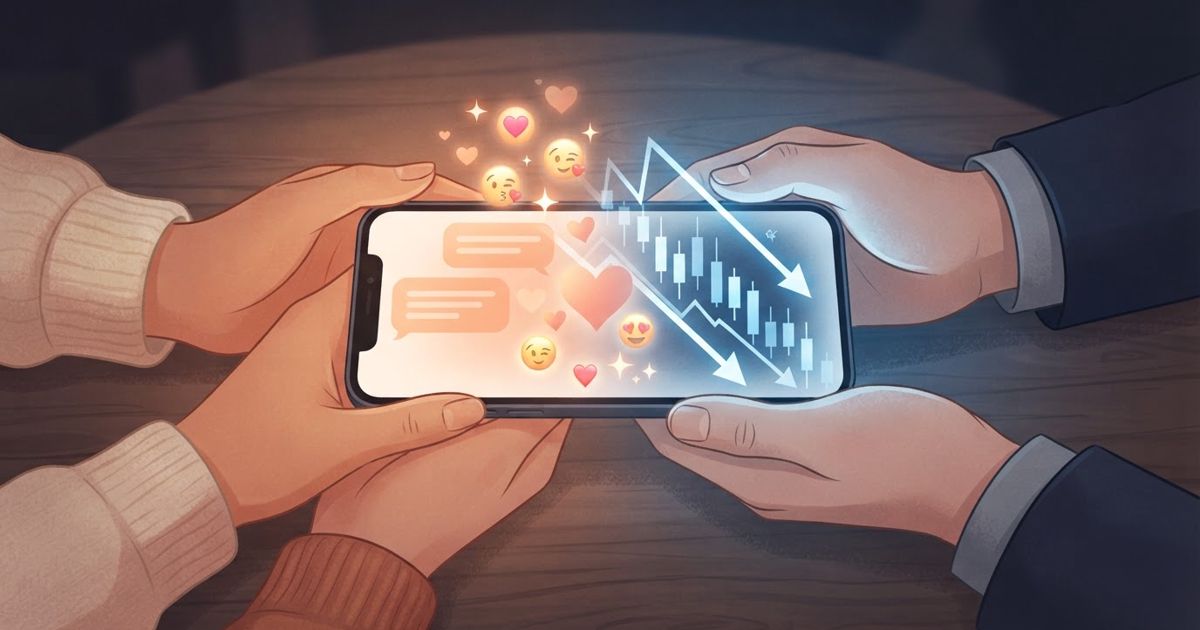
Table of contents
Most people picture a scammer as someone who asks for money on day one. That version is easy to refuse. The version that costs people their savings is patient: it invests weeks in affection and trust, and only later does the conversation drift toward a "great opportunity." By then the ask does not feel like a scam — it feels like a friend letting you in on something. Recognizing the pattern before money is ever mentioned is the whole game.
Why the investment angle is different
A classic romance scam eventually asks you to send money for an emergency — a hospital bill, a stranded traveler, a customs fee. A romance-investment scam is subtler and often larger. The scammer never asks you to give them money. They introduce you to a platform, an app, or a "system" and encourage you to invest your own money there. Because you are the one clicking buttons and "seeing profits," it feels like your idea. That sense of control is exactly what makes it so effective and so hard to walk back.
Our broader look at how AI fake profiles changed online dating safety covers how convincing these personas have become. This piece focuses on one specific arc: the slow pivot from romance to finance.
The phases, in order
These scams tend to follow a recognizable sequence. Knowing the phases lets you notice where a conversation is heading before it arrives.
- The fast bond. Unusually quick warmth, constant messaging, and a feeling that you have met someone unusually attentive. They mirror your values and remember small details.
- Moving off the app. An early push to switch to a private messaging channel, away from the platform's monitoring and reporting tools.
- The lifestyle. Casual mentions of financial success — smart trades, a comfortable life, a knack for a particular market. No pitch yet, just an impression.
- The soft introduction. They mention an investment they use, often framed as something a relative or mentor taught them. They are not asking you to join. They are letting you overhear.
- The invitation. Once you express curiosity, they offer to "show" you, walk you through a first small deposit, and celebrate your early gains.
- The trap closes. Withdrawals get complicated. There are fees, taxes, or a minimum balance to unlock. The more you have "made," the harder it is to accept that none of it was real.
The critical insight: phases one through four contain no request for money at all. That is what disarms people. If you wait for the ask to protect yourself, you have already spent weeks becoming emotionally invested.
Early warning signs, before any money is mentioned
Watch for these while the conversation is still purely romantic:
- Speed that does not match reality. Deep declarations of connection before you have met in person or on a live video call. Scammers rush intimacy because trust is their raw material.
- Reluctance to be on camera live. Excuses about cameras, poor connections, or being in a remote location. A one-off is normal; a pattern is not, which is why we recommend learning to verify a match without making it awkward.
- A polished but slightly generic backstory. High-status job, often abroad or offshore, frequently "in finance," "in crypto," or on an oil rig or military deployment — roles that conveniently explain why they cannot meet.
- Steering off-platform early. Wanting to leave the dating app almost immediately removes the safety net of in-app reporting.
- Unprompted talk of money and success. Financial competence woven into romance for no clear reason is a setup, not small talk.
Any one of these can be innocent. Several together, especially with someone you have never met live, is the pattern.
The one rule that protects you
Here is a boundary that costs you nothing and stops nearly every version of this scam: never move money — into any platform, wallet, or app — because of someone you met dating and have not met in person. Not a "small test deposit." Not "just to see how it works." The moment romance and a financial opportunity share the same conversation, treat the opportunity as fictional until proven otherwise in the daylight of your own independent research.
Legitimate partners do not need you to fund an account to prove your commitment. Legitimate investments do not arrive through someone you have been flirting with for three weeks and have never seen live.
If you are already in it
Realizing you might be in one of these is disorienting, and shame keeps people quiet, which is exactly what the scam relies on. A few steps:
- Stop depositing immediately, even if you are told one more payment unlocks a withdrawal. That promise is part of the script.
- Screenshot everything — the profile, the chats, the platform, transaction records.
- Report the profile inside the dating app so the account can be actioned, the same instinct behind knowing when to delete, report, or block a match.
- Contact your bank or payment provider promptly; speed matters for any chance of recovery.
- Report it to the relevant authorities in your country. You are not the first person this happened to, and reporting helps trace the operation.
None of this requires you to have been naive. These operations are professional, scripted, and designed to defeat smart, careful people. The defense is not being cleverer than the scammer — it is refusing, as a flat rule, to mix money with romance you have not yet verified in real life.